
The success of an aesthetic workspace lies in a holistic view of form, function and cleverly constructed combinations. We are known for our creative design, upmarket finishes and personalised client services.
Local manufacturers are used wherever possible to ensure continuity and the availability of parts.
It is imperative that our client understands the terminology used in office furniture so that we are all on the same page. We assist with layouts, the selection of furniture, wood and fabrics, as well as all the add-on elements such as floor tiles or carpeting, lighting, wall paper, and art choices.
Our experience in this industry can save you time and money. Workstation combination selections as well as costs pertaining to finishes can be worked around to create a functional and cost-effective solution within budget limits.
Prior to placement of order the following must be qualified;
- Has the space been measured and will the selected products fit ?
- Do any existing finishes need to be matched ? Has the wood or fabric been identified?
- Are final fabrics and finishes available and what is the lead time for delivery of the goods?
Most of our products are made to order and cannot be changed once an order is placed.
All quotations are based on standard supplier finishes. Leather and designer fabrics are available on request.
Furniture
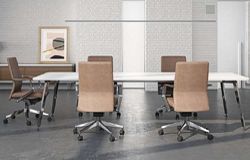

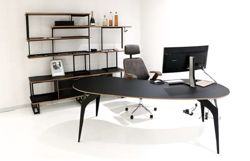


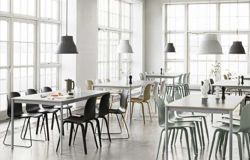



Customising your finishes
Fabrics
An important part of furniture selection that requires attention is the upholstery, or the fabrics used for the pieces. Insignificant as it may seem, choosing the right upholstery is a very important decision that needs to be made. Choosing correctly will help ensure furniture longevity whilst achieving the right mood for the room. The perfect choice will depend on the environment and conditions under which the furniture will be used. For example, the reception area and common areas are usually the areas with the most traffic so the upholstery must be high durability. Fabrics are available in a huge range of different colours and patterns:
Leather:
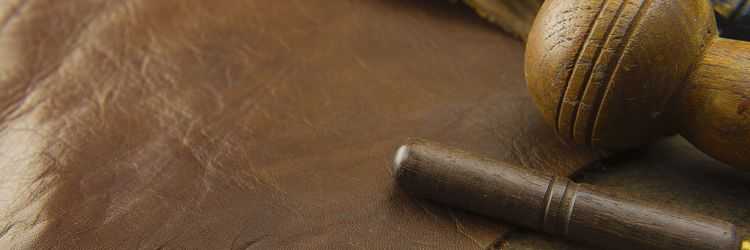
Genuine leather is mostly used for executive offices. It is highly durable with a large range of colours.
The main disadvantage of leather is its cost. Typically, it is significantly more expensive than other upholstery options. Genuine leather commands pride of place in many interiors and is therefore often elevated to main focal points and features within a room.
Bonded Leather:
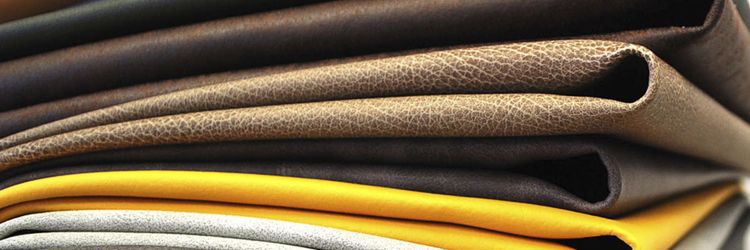
One of the benefits of using bonded leather is the that it is Eco-friendly and on the less expensive side.
Bonded leather is made from the recycled scraps of existing leather, meaning it does not require additional harvesting to produce. Bonded leather also offers the benefit of consistency, it has a consistent look and feel each time it is produced.
Standard/Contract Fabric:
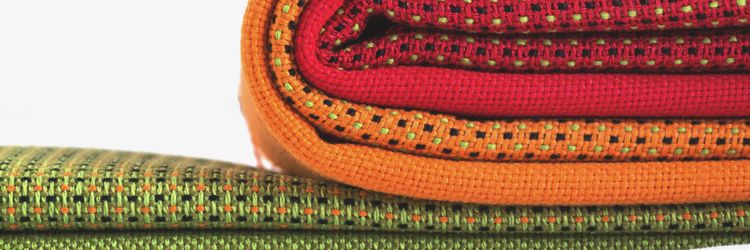
Contract quality grade finishes are specifically made for high traffic areas and offer the best wear and tear for your budget.
They are easier to clean and maintain while offering good acoustic properties for noisy places.
Designer Fabric:
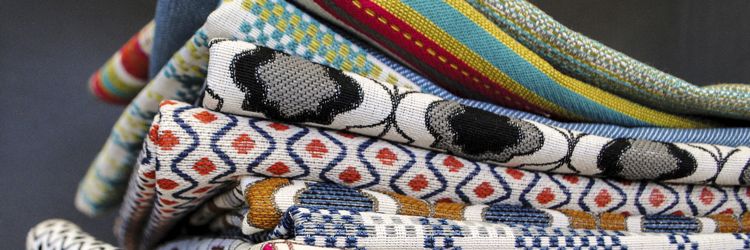
These fabrics range from cotton to synthetic fibres and include specially treated materials designed to resist wear and tear.
Designer fabrics comes in a huge array of colours and patterns, so you can choose a fabric that effortlessly matches your environment.
Wood Finishes
Today’s office furniture manufacturers can produce all sorts and styles of high-quality furniture from various materials. Your selection will depend on the overall look you want to achieve, your budget, and the use of the product itself. Below is a brief outline of some wood options available. Spacio is here to to guide you through the decisions you need to make to avoid costly mistakes.
Solid Wood:
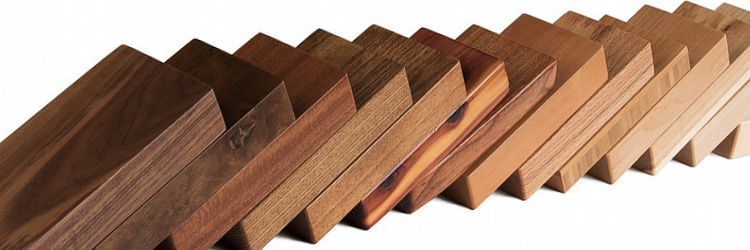
Wood furniture, especially solid wood, has been a long-time popular choice in many professional settings. Nowadays, it faces stiff competition for floor space in all types of workplaces and company buildings. Solid wood office furniture has plenty of pros and cons.
When solid wood is exposed to extreme atmospheric conditions, it will expand or contract and may split. It is not user-friendly in terms of longevity for large projects, shows water marks, and is expensive.
Veneer:
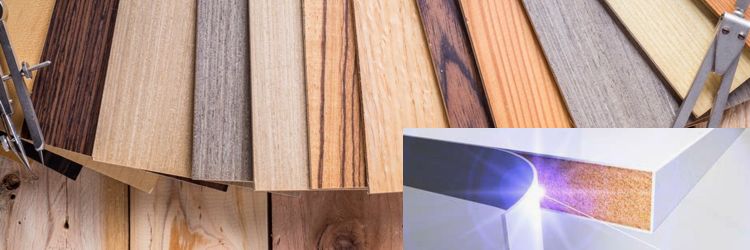
Veneers show the grain of a tree as it is peeled from the bark into thin layers which are glued onto chipboard at right angles to prevent splitting.
They are hand-selected by master craftsmen that understand quality and fused onto the surface of particleboard or MDF.
High standards ensure continuous quality, meeting the exact requirements of cabinet makers, shop fitters and furniture manufacturers.
Formica:

Formica is most suited to horizontal applications such as desktops, countertops as well as other high-usage surfaces. It is fabricated by laying up sheets of resin-impregnated kraft and decorative paper. These are pressed together under high heat and pressure whereby the resins bond the paper together to create Formica. This product has a longer life-span than Melamine, and is more cost-effective than Veneer. It provides resistance to impact, heat and moisture.
Available in a many a large range of colours and its commercial value can easily replace veneer.
Melamine:
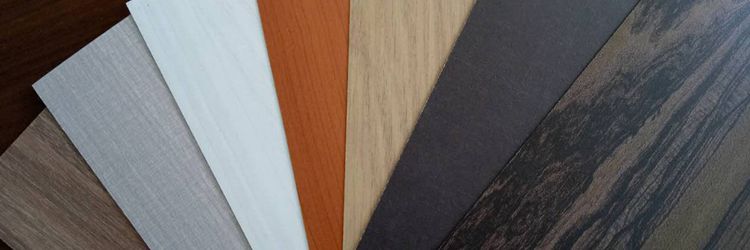
Melamine is made by fusing a decorative melamine-impregnated paper permanently onto the surface of particle board or MDF. It is most suitable for vertical applications, but can used for light horizontal applications. An ideal choice for built-in cupboards and carcassing applications such as door fronts, drawers and shelving.
Melamine comes in a variety of imitation prints and colours. It is a versatile raw material, more cost-effective than Formica, but not as hard-wearing.
Eco-friendly Certifications (Fabric & Wood)
STANDARD 100 certification controls the use of chemicals in the production process, as well as ensuring that there are no harmful substances remaining in the end product which could irritate or damage the skin.

FR-One Fire Retardant fabrics meet the most demanding fire standards world-wide. FR-One Fire Retardant fabrics are one of the only decorative fabrics in the world that are certified as module E under the Maritime Equipment Directive

FibreGuard's stain-resistant fabrics are easy-clean fabrics which are green-conscious. FibreGuard is certified under the STANDARD 100 by OEKO-TEX®. No harmful finishes or chemicals will be relased.

Formaldehyde is found in resins used in the manufacture of composite wood products like particleboard (PB), medium-density fibreboard (MDF) and oriented-strand board (OSB). E1 Certified board is regulated by a series of standards.
Ergonomics
Workplace ergonomics is the science of designing the workplace, keeping in mind the capabilities and limitations of the worker. A workplace ergonomics improvement process removes risk factors that lead to musculoskeletal injuries and allows for improved human performance and productivity.
We also create functional workspace solutions to address and improve accessibility for the disabled.
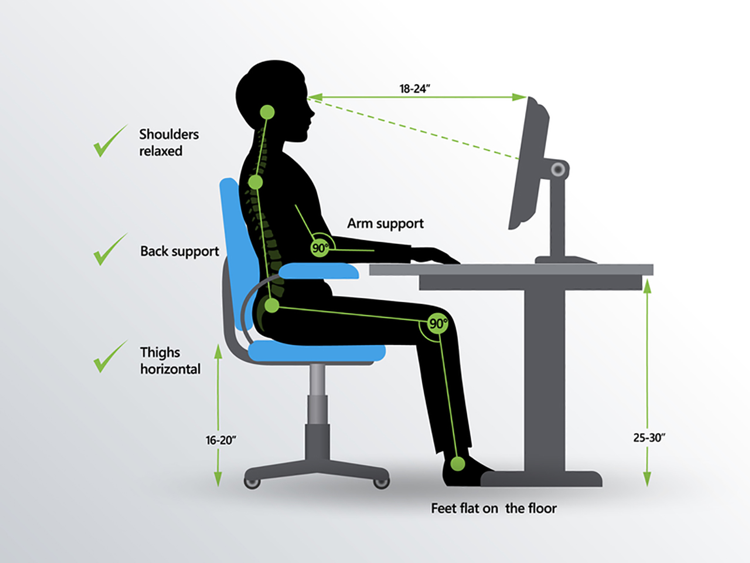
Seat: The seat should be able to adjust until your thighs are parallel to the ground. Shorter/taller users may need varying height gas cylinders. Adjusting the chair too high places more pressure than necessary on the backs of the legs, reducing circulation. If the chair is too low, a smaller portion of the legs is in contact with the chair and the pressure on that area is correspondingly greater.
Backrest: The backrest height should be adjustable so the lumbar support can be fitted into the low back. The backrest should mirror the shape of your back to provide support. The weight of the upper body is supported by the spinal vertebrae at the bottom of the lumbar curve.
Armrest: Even with the range of adjustments found in many of today’s armrests, there are some places where armrests will interfere with work. If the armrests are too high, you might have to shrug your shoulders to use them, which could fatigue your shoulders and back. Conversely, if they are too low, then you might end up leaning on one armrest.
Mechanism: The Mechanism in an ergonomic chair helps users with their manoeuvrability, making it easier to reach different points of their desks without having to strain excessively.
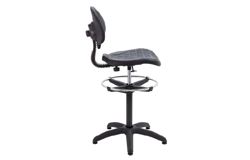
- Swivel Mechanism: Typically found on a sit/stand stool where you continuously alternate between sitting and standing
- Swivel & Tilt Mechanism: works on all office chairs where the seat and backrest have a single shell. In these chairs, the seat and backrest cannot be separately adjusted and will always move together in the same direction
- Permanent Mechanism: allows MANUAL adjustment to the angle of the backrest.It remains fixed in one position once it is set up. Office chairs that are fitted with a Permanent Contact mechanism are ideally suited for occasional use and are not recommended for intensive use.
- Synchro Mechanism: Two part shell allowing for the mechanical tilt that moves the chair’s backrest and seat together in a fixed ratio. All synchro mechanisms ensure that the movement of the backrest is greater than the movement of the seat.
- Knee Tilt Mechanism: allows the user's feet to remain flat on the ground while the back of the chair is in recline. To achieve this action, the pivot point for a knee tilt mechanism is at the front of the chair rather than in the middle of the seat like most office chairs. Knee Tilt Mechanism is ideal for professional intensive use.


Due to the many long hours spent behind a computer, the need for sit/stand (ie. height-adjustable desks) has become popular. People are encouraged to move as much as possible whilst they work – and the sit/stand desk provide a measure of relief from sitting.